I used to chase launches. I thrived on finishing a site, handing it off, and hearing “thanks!” before disappearing into the next project.
But after years of watching clients wrestle with broken plugins, abandoned dashboards, and content rot — I realized something important: that handoff-based model wasn’t helping real businesses. And so I shifted to a different way of working, one that prioritizes uptime, clarity, and stability over trend-chasing templates and disposable builds.
The Pattern That Kept Showing Up
Here’s what I saw, again and again:
Business owners can’t update their own site without fear.
WordPress plugins break after updates.
Nobody owns the system once the site is “done.”
Clients avoid their own dashboards like they’re booby-trapped.
These are real small business challenges — not “design preferences.” It became obvious that what most teams needed wasn’t another one-off website, but a website management platform that felt predictable and safe.
When “Managed Website System” Actually Means Managed
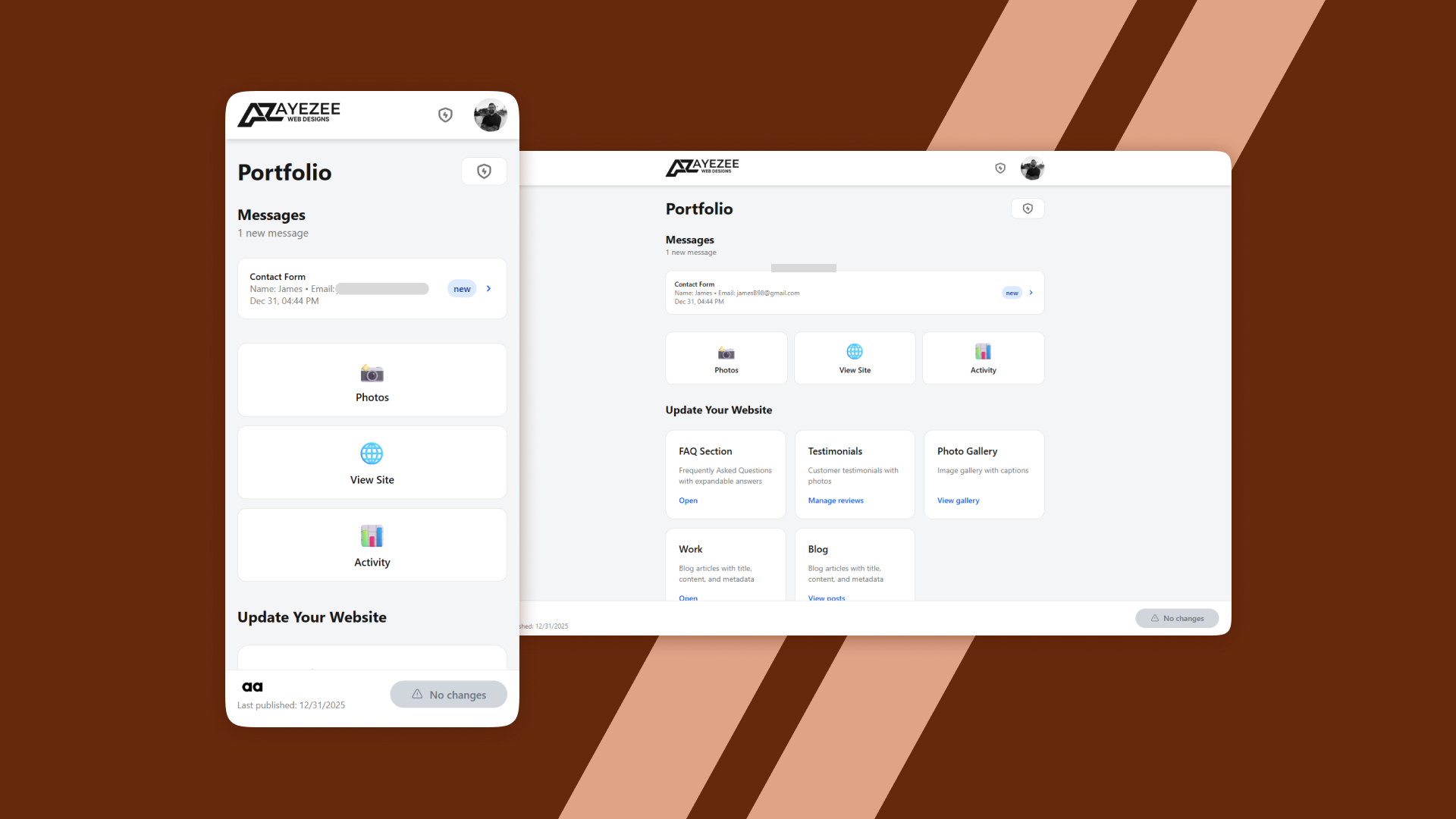
Not packaged like a SaaS with endless menus and options, but a custom client dashboard built around each business’s real needs. This isn’t a generic theme — it’s a bespoke “web app for business owners” that they can actually use without dread.
Why the Handoff Model Is Broken for Real Businesses
The traditional handoff — “I build it, I launch it, you own it” — sounds nice in theory. But business owners don’t want to be webmasters. They want reliable infrastructure that just works.
It’s not that they’re lazy — it’s that most content management systems are complex, brittle, and full of edge cases. One plugin update and suddenly “Contact form doesn’t work anymore.” Or that blog index disappears because JavaScript changed. Those kinds of surprises add up.
Headless CMS for Small Business?
There was a time I toyed with headless CMS approaches — like decoupling content from presentation with Astro or Next.js web apps. But a headless frontend doesn’t solve the underlying problem if clients still fear clicking “Publish.” They need guardrails, not freedom that feels like a maze.
The Shift: From Launch to Longevity
The pivotal moment for me came when I stopped optimizing for “ship it quickly” and started optimizing for “still works in 3 years.” That sounds obvious, but it requires a different mindset.
Here’s how that changed the way I work:
Instead of delivering a website, I deliver a website maintenance system.
Instead of a generic CMS, clients get a custom web dashboard tuned to their workflows.
I design websites as infrastructure — not campaign landing pages that die after launch.
What I’m Building Instead
Every client gets a private dashboard — a dedicated space where they can manage updates safely, without the fear of destroying something. Think less “open sandbox with 47 plugins,” and more “guided, task-focused panel with exactly what you need.”
Guardrails Instead of Freedom
I know that sounds restrictive — but hear me out. Too much freedom is paralyzing. When a dashboard shows 400 settings, the owner doesn’t know where to start. But when it shows 5 clear tasks like “Update Hero Text” or “Add Team Member,” there’s confidence, not chaos.
What This Actually Changes for Clients
So what’s the real benefit?
Less anxiety: Clients don’t fear breaking their own site.
Fewer broken things: Because the system updates itself and avoids plugin he-said-she-said conflicts.
Less vendor-hopping: No more “dev of the month” syndrome.
More trust in the site: It feels like a tool, not a ticking time bomb.
Small Business Website Management That Makes Sense
This kind of small business website management isn’t trendy. It’s practical. It’s not a shiny Next.js web app demo with fancy scroll effects — it’s a dependable backbone that helps businesses operate without web fear.
Who This Is For (And Who It’s Not For)
This is for:
Owners who want their site to just quietly work.
Teams that need a reliable CMS without complexity.
Businesses that value uptime and clarity over endless features.
This is not for:
Tinkerers and experimenters who want full control.
People who treat their website like a hobby project.
Clients who want sprawling dashboards full of options.
And that’s okay — knowing who it's not for is part of being thoughtful about ecosystem fit.
Where I’m At Now
Here’s the honest bit: the platform I’m building is still evolving. It’s not “done.” That’s exactly the point — because it’s built around real usage patterns, not demos.
Every client helps shape it. Every edge case and every feature request feeds back into the system. And that’s a strength, not a weakness. It means I’m not selling hype. I’m building something functional, reliable, and long-term. Something that feels like infrastructure, not a disposable site.
Choosing Long-Term Leverage
This approach has changed how I think about my work: I’m no longer chasing the next launch. I’m choosing long-term leverage — systems that help clients without constant hands-on support, tools that evolve rather than decay, and interfaces that make sense, not overwhelm.
Final Thoughts
So if you’re here because you’re tired of websites that rot, plugins that crash, and dashboards that scare, you’re in the right place. I’m not selling perfection. I’m offering a different way — one where your web presence is stable, understandable, and built for the long haul.
And if you’re curious about how this system could work for you — well, that’s a conversation I’d love to have.